Black Holes: Where Gravity Reigns Supreme
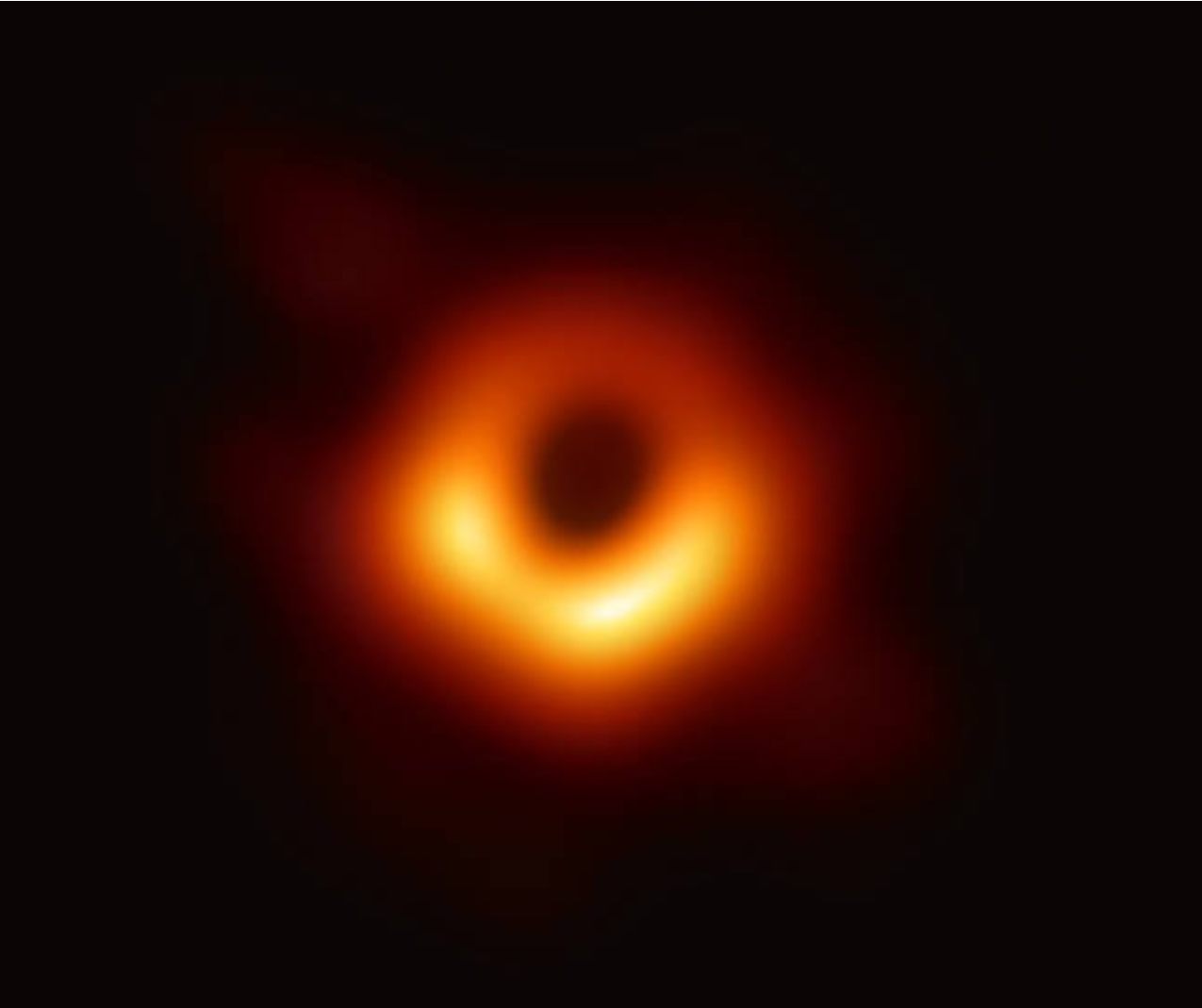
Black holes are among the most fascinating and extreme objects in astrophysics. They are regions of spacetime where gravity is so strong that nothing—not even light—can escape once it crosses a boundary known as the event horizon.
Formation of Black Holes
Most black holes form from the deaths of massive stars. During a star's life, nuclear fusion in its core produces outward pressure that balances the inward pull of gravity. This balance (hydrostatic equilibrium) allows the star to remain stable for millions to billions of years.
When a massive star exhausts its nuclear fuel, fusion slows and eventually stops. Without outward pressure, gravity causes the core to collapse. In many cases, the outer layers are ejected in a supernova explosion, while the core continues to collapse.
If the remaining core is sufficiently massive, no known force (including neutron degeneracy pressure) can halt the collapse, and a black hole forms.
Approximate outcomes based on initial stellar mass:
| < ~8 solar masses | → white dwarf |
| ~8–20/25 solar masses | → neutron star |
| > ~20–25 solar masses | → likely black hole |
Structure of a Black Hole
Event Horizon
The event horizon is the boundary surrounding a black hole beyond which escape is impossible. Once matter or radiation crosses it, all possible future paths lead inward toward the black hole. Importantly, the event horizon is not a physical surface—it is a geometric boundary in spacetime.
Singularity (Classical Description)
At the centre lies the singularity, where classical general relativity predicts infinite density and curvature. However, most physicists view this as a sign that current theory breaks down, and a quantum theory of gravity is needed to fully describe this region.
Types of Black Holes
Stellar-Mass Black Holes
Formed from collapsing stars, typically ranging from a few to tens of solar masses.
Intermediate-Mass Black Holes
Hypothesised black holes with masses between stellar and supermassive scales. Evidence is still developing.
Supermassive Black Holes
Found at the centres of galaxies, with masses from millions to billions of solar masses. The Milky Way contains the supermassive black hole Sagittarius A*.
What Happens When You Fall Into a Black Hole?
The experience depends strongly on the size of the black hole.
Near the Event Horizon (Falling Observer)
From the perspective of the falling astronaut, they do not necessarily notice anything special at the event horizon (especially for large black holes). Physics locally behaves normally due to the equivalence principle. However, tidal forces may begin to stretch and compress the body.
This stretching effect is called spaghettification — gravity is stronger on one side of the body than the other, stretching the object lengthwise and compressing it sideways.
For small (stellar-mass) black holes, tidal forces near or even before the horizon are so strong that the astronaut would likely be destroyed before crossing it. For supermassive black holes, tidal forces at the horizon can be relatively weak, allowing the astronaut to cross the horizon without immediate destruction.
What a Distant Observer Sees
To a distant observer, the falling astronaut appears increasingly strange due to strong gravitational effects on light and time.
Time Dilation: As the astronaut approaches the event horizon, their motion appears to slow down. Signals take longer and longer to arrive. This is due to gravitational time dilation, where time runs more slowly in stronger gravitational fields.
Gravitational Redshift: Light emitted by the astronaut loses energy escaping the gravitational field — wavelengths shift toward the red end of the spectrum, light becomes dimmer and eventually shifts beyond visible wavelengths.
Apparent Freezing: To the distant observer, the astronaut appears to slow dramatically near the event horizon, seeming to "freeze" just above it. Their image gradually fades due to redshift and time delay until it effectively disappears. The observer never sees the astronaut clearly cross the event horizon.
✦ Key Subtleties:
• The astronaut does cross the event horizon in their own proper time.
• The distant observer never receives a signal confirming the crossing.
• Both descriptions are correct within general relativity and depend on the observer's frame of reference.
Conclusion
Black holes represent some of the most extreme predictions of general relativity. Formed through gravitational collapse, they challenge our understanding of space, time, and matter. While the event horizon marks the point of no return, the experience of crossing it depends on the observer's frame of reference and the size of the black hole.
Black holes continue to play a central role in modern astrophysics, testing the limits of physics under conditions that cannot be reproduced on Earth.