The Brightest Supernova in Recorded History: SN 1006
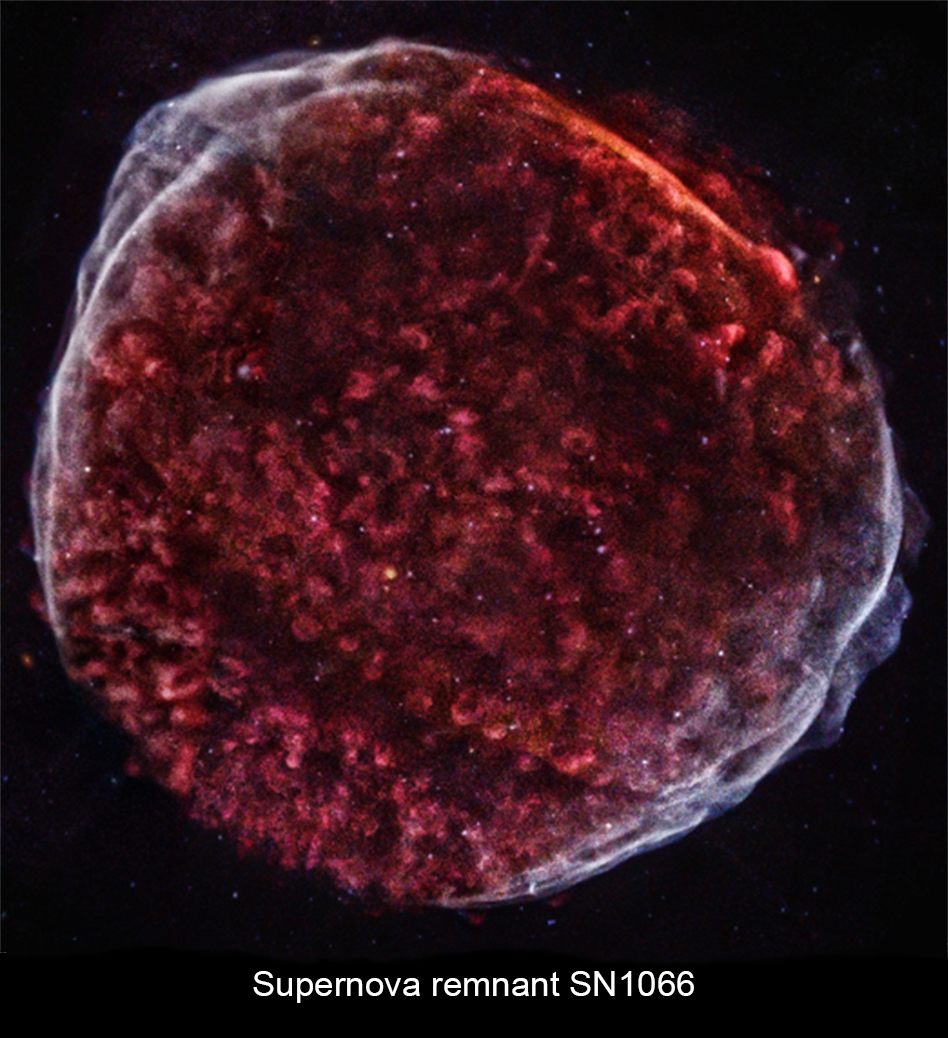
Over a thousand years ago, people around the world looked up into the night sky and saw something both wonderful and terrifying. A patch of the night sky in the constellation Lupus — previously dark — suddenly flared with light sixteen times brighter than Venus, reaching an estimated apparent magnitude of -7.5. It was possibly visible in daylight for short periods.
When and Where It Appeared
The "guest star" first appeared between 15 April and 1 May 1006 AD. Astronomers in China, Japan, Europe, and the Arab world all documented this spectacular sight. The constellation Lupus (the Wolf) in the southern sky was the location — a region that had previously held no notable bright stars.
Chinese Records: The Most Comprehensive
The Chinese have the most comprehensive record of the event, documenting it nine separate times in official imperial records. Their observations were uniquely systematic, tracking the 'guest star' (客星) from its appearance in early May 1006 until its disappearance nearly three years later.
They described it as a "guest star as large as half the Moon, shining with a bluish-white light" that appeared in the southern sky near known reference stars in Lupus. It was extremely bright, reportedly casting faint shadows at night. The celestial visitor was carefully tracked in imperial records of the Song Dynasty.
The Chief Official of the Spring Agency noted that "the light was golden, its rays brilliant, and peace and prosperity to the state are foretold by its appearance."
Modern Astronomy: What We Know Now
Today, astronomers have identified the remnant as the SN 1006 supernova remnant, located approximately 7,000 light-years from Earth. It is classified as a Type Ia supernova — a white dwarf exploding in a binary system.
The energy output was among the most energetic events in the Milky Way in the last millennium. A Type Ia supernova occurs when a white dwarf accumulates too much material from a companion star and undergoes a runaway thermonuclear explosion, completely destroying itself. Unlike core-collapse supernovae, Type Ia events leave no stellar remnant behind — just an expanding debris cloud.
How Often Do Galactic Supernovae Occur?
Astronomers estimate that supernovae occur in the Milky Way Galaxy about roughly 2–3 times per century — meaning about one every 30–50 years on average.
However, most are not visible to the naked eye because:
- Interstellar dust blocks much of the galactic plane
- Many occur on the far side of the galaxy
- Some are hidden behind dense star clouds
So although supernovae probably happen fairly regularly in the Milky Way, we rarely see spectacular naked-eye events from Earth.
Could Another Bright Supernova Happen Soon?
Absolutely! Astronomers monitor several nearby stars that could go supernova at any time, including Betelgeuse (in Orion) and Eta Carinae (which you can read about in another article on this site). The next bright galactic supernova could happen tomorrow, or it could be centuries away. But one thing is certain: when it happens, it will be one of the most spectacular celestial events in human history.
Conclusion
SN 1006 stands as a reminder that the night sky is not static. Stars are born, live, and die in spectacular fashion. A thousand years ago, observers across three continents witnessed a cosmic explosion so bright it cast shadows at night. Today, modern astronomers study its expanding remnant to understand the physics of stellar death. And somewhere in our galaxy, another star is likely preparing for its own grand finale — waiting to amaze whatever civilization looks up at the right moment.