John Bevis: The Man Who Witnessed a Planetary Occultation
John Bevis (10 November 1695 - 6 November 1771) was an English medical doctor, amateur astronomer and a prominent Fellow of the Royal Society. He is best known for discovering the Crab Nebula M1 in 1731. What he is less known for and perhaps more interesting is that he is the only person in history to have on record the occultation of one planet by another telescopically.
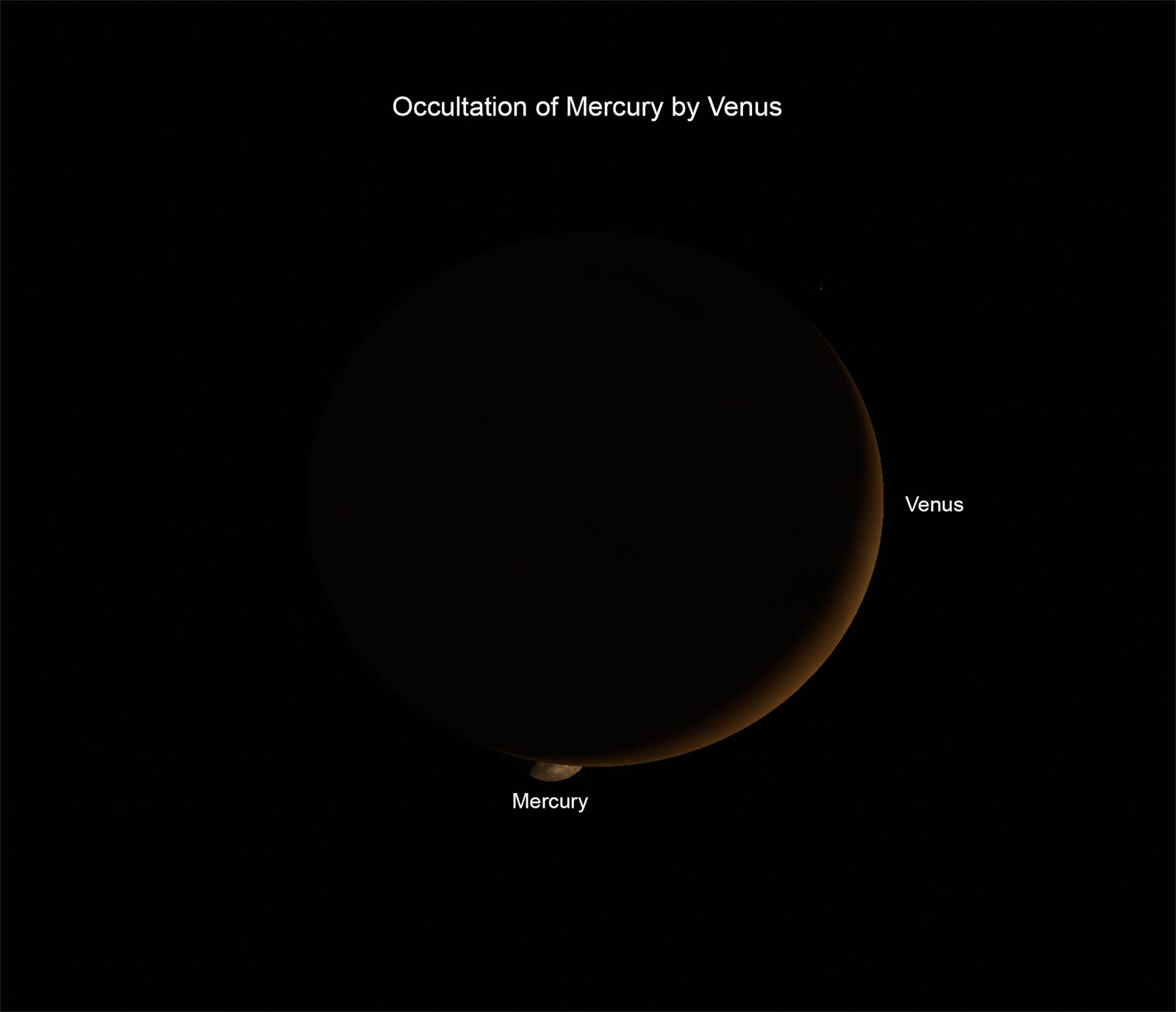
On the evening of 28 May 1737 just at the end of astronomical twilight, at Greenwich Observatory, John Bevis watched the event unfold low in the west with a nonachromatic refractor of 24-foot focal length. At 9:44:00 he notes that Mercury is 'no more distant than 1/10 part of Venus's diameter. Then Clouds cover the planets.' At 9:52:06 the clouds part and 'Venus shines out once more brightly; Mercury is in fact entirely concealed behind Venus. But clouds catch up to Venus afresh, preventing further contemplation of this rare spectacle.' It is interesting that at mid-occultation Venus would only be 1.4° above the theoretical horizon (about 3 apparent diameters of the Moon).
Bevis immediately recognized the importance of his sighting and submitted a formal report to the Royal Society in Latin. His paper was titled 'Mercurius a Venere occultatus maii 17 1737, in observatorio regio Grenovici' (Mercury hidden by Venus on 17 May 1737, observed at Royal Observatory Greenwich).
The next time Venus occults Mercury will be on 3 December 2133, even then the event will hardly be observable, since the two planets will be just 4° from the sun.
Here is another interesting fact about Bevis. He is one of only two persons in Britain who are known to have observed comet Halley on its first predicted return in 1759. He observed it on May 1 and 2, 1759 after its perihelion, the other British observer, also physician, was Nicholas Munckley who saw it on the same dates.
John Bevis died on November 6, 1771 at age 76, from injuries received in a tragic accident when falling from his telescope.
While he is nearly forgotten today, he deserves a note in history as the only man to observe the rare and remarkable planetary phenomenon.